Our Projects
In the built environment and higher education sectors, one of the world’s most persistent and complex challenges continues to be gender equality. The University of the Built Environment is proud to have secured and delivered seven externally funded gender-focused research and capacity-building projects, supported through highly competitive awards from the British Council. Collectively, these projects have played a significant role in advancing gender equality, institutional reform, and safe learning environments across multiple international contexts.
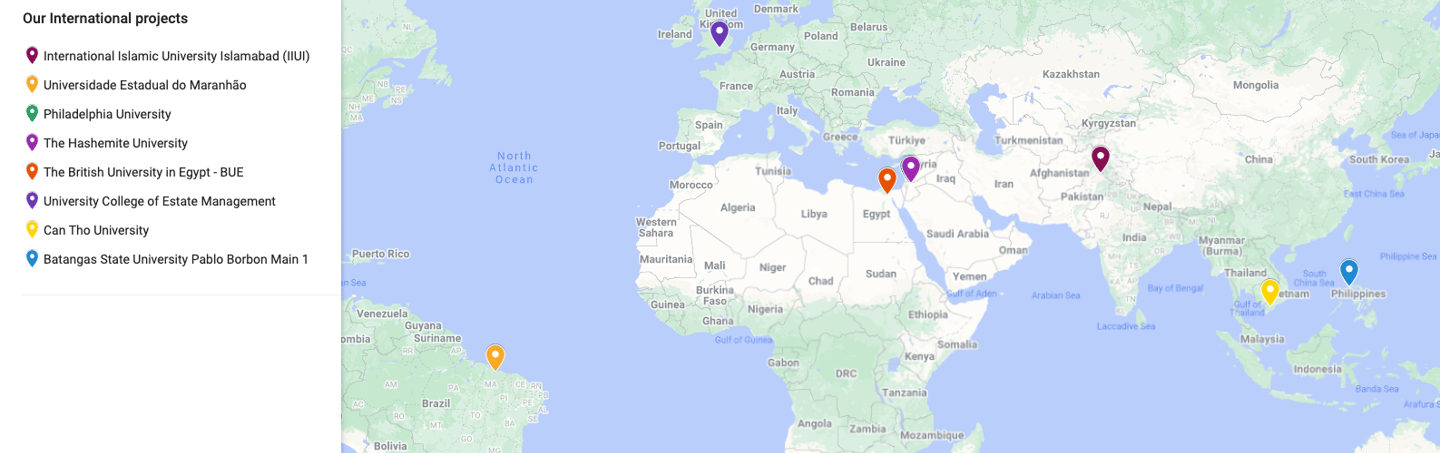
A distinctive strength of this portfolio is its strong and sustained engagement in Brazil, where the University has successfully delivered two major gender equality projects in partnership with leading Brazilian institutions. These initiatives have addressed both career equality for women graduates and violence prevention and campus safety in higher education, positioning Brazil as a key regional hub within our global gender equality research agenda. Across the full portfolio, the University has received over £172,940 in dedicated British Council funding for gender equality research and implementation. These projects have been delivered across Brazil, Egypt, Jordan, Pakistan, the Philippines, and Vietnam, working closely with universities, policymakers, professional bodies, and civil-society organisations to ensure context-sensitive and impactful outcomes.
Our gender equality projects have focused on:
Preventing gender-based violence and creating safer learning environments
Improving women’s transitions from higher education to employment
Advancing women’s leadership in higher education and the built environment
Addressing structural and cultural barriers to gender equality
Embedding gender-inclusive policies and practices within institutions
Through international partnerships, these projects have formed multi-country research consortia, enabling the collection and analysis of large-scale empirical data, the delivery of targeted capacity-building workshops, and the dissemination of findings through high-impact publications and international conferences. Importantly, the work has gone beyond research alone, contributing to lasting institutional change, strengthened reporting and support mechanisms, and increased awareness among students, staff, and decision-makers.
By delivering two gender equality projects in Brazil and leading comparable initiatives across other regions, the University of the Built Environment has established itself as a global nexus for gender equality research and practice, demonstrating how international collaboration can drive meaningful, sustainable change in higher education and the built environment.
Brazil 2
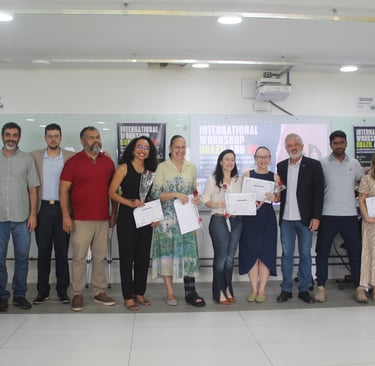
Empowering Women in Brazilian Higher Education through Violence Prevention and Safe Learning Environments (SafeEduBrazil) Project value: £24,990 Partnership: Universidade Estadual do Maranhão (UEMA), Universidade Federal do Pará (UFPA), and the University of the Built Environment (UBE)
Gender-based violence remains a significant and underreported challenge within Brazilian higher education, adversely affecting women’s safety, wellbeing, and academic progression. Research evidence indicates that many women experience harassment or violence during their time at university, yet incidents are frequently unreported due to fear of retaliation, social stigma, limited trust in institutional mechanisms, and inadequate support systems.
While some universities have introduced policies and services to address these issues, their effectiveness has varied considerably across institutions. SafeEduBrazil was designed to address these gaps by strengthening institutional capacity to prevent and respond to gender-based violence in higher education. The project focused on raising awareness among students and staff, developing and reinforcing gender-inclusive policies, improving reporting and support mechanisms, and promoting a culture of zero tolerance towards violence. Through international collaboration and capacity-building activities, the project supported the creation of safer, more inclusive learning environments for women in Brazilian universities.
The project was successfully completed in 2025.
Brazil 1
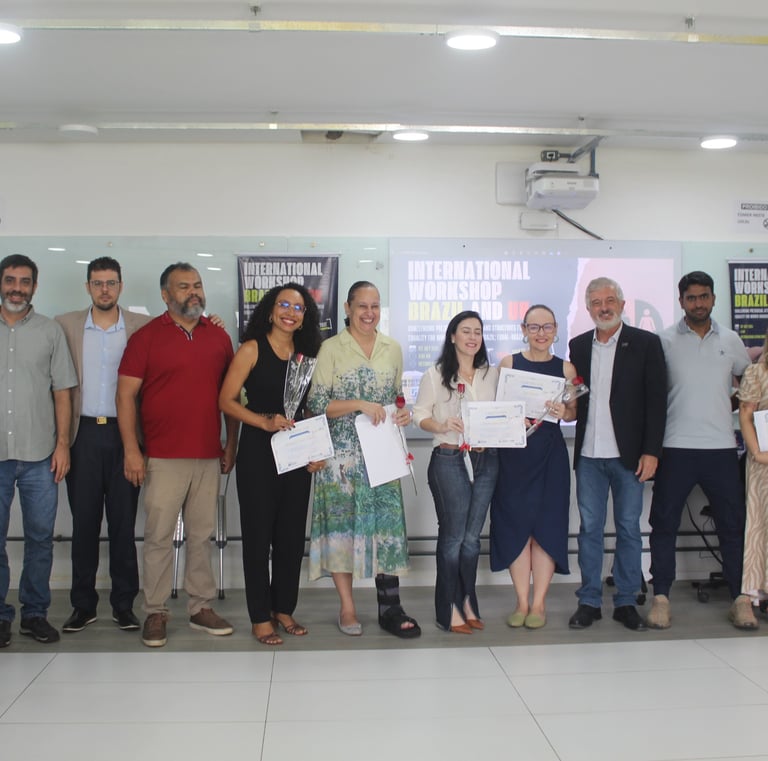
Challenging prejudicial attitudes and structures for career equality for women graduates in Brazil; Equal-Brazil, Project value: £24,900, Partnership with Universidade Estadual do Maranhão (UEMA), Brazil
Women in Brazil, while more likely to have attained a tertiary qualification, are less likely to be employed than men, according to a sobering report by the Organization for Economic Co-operation and Development (OECD). The belief that completing a degree leads to better opportunities does not hold true for women in Brazil, and while the focus of the Brazilian government has been on providing access to education, support and measures of gender progress have yet to be explored.
This project, led by Prof Angela Lee aims to identify the challenges that women graduates face in the transition to employment, understand political, economic, social and cultural boundaries, and develop action plans to mitigate these barriers.
The project was successfully completed in Jan 2025.
Find more Information about the project at: www.equal-brazil.com
Pakistan
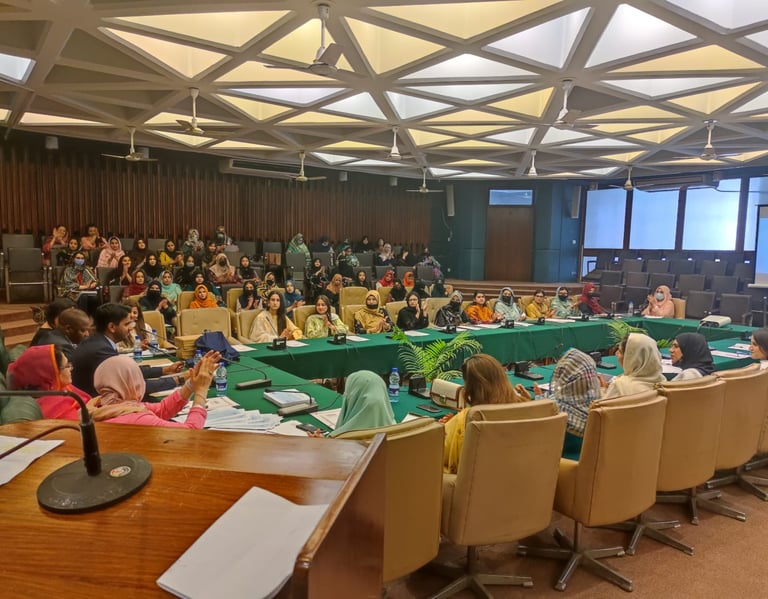
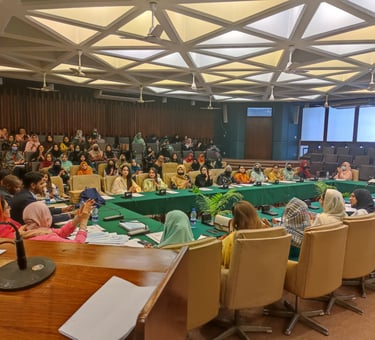
Ensuring a safe transition from higher education to empowerment for women in Pakistan through eliminating violence and creating safe learning spaces; Safe4All, Project value: £24,950 Partnership with International Islamic University Islamabad (IIUI)
According to research by the UN, almost 1 in 3 women are affected by gender-based violence (GBV) in their lifetime. Pakistan faces a particular challenge to curb GBV – it ranks poorly on the World Economic Forum’s Global Gender Gap Report 2023, with 70% of women in the country experiencing violence. What’s more, the female workforce is limited to 22% due to the risk of sexual harassment and assault. This threat of violence and harassment, as well as the culture of masculinity, patriarchy and abuse in Pakistan, mean women are afraid to work outside the home. It also extends to their experience in educational institutions, with a report by Plan International finding that an estimated 250 million male and female students are subjected to acts of violence every year in various educational environments.
This project, led by Dr Muhammad Qasim Rana will look to increase the provision of education for women and establish secure learning environments, with the goal of facilitating women’s empowerment, fostering inclusivity and disrupting the perpetuation of equality in Pakistan. The project has started in Jan 2024 and will be finished by Jan 2025.
Find more Information about the project at: www.safe4allpk.com
Vietnam
CAREER: Cultivating Awareness, Resources, and Equality for Educators in Vietnam, Project value: £24,950 Partnership with Can Tho University, Vietnam
According to the 2018 Global Gender Gap Report, Vietnam was ranked 77th out of 149 countries in gender equality (IMF, 2019). Vietnam has made notable strides in women's economic participation, with a narrowing gap between men and women in the labour force. However, gender inequality remains a persistent issue across Vietnam (Nguyen, 2021). Recognising the intersectionality of gender with other aspects of diversity, equity, and inclusion (EDI) identities, the project seeks to create a more equitable educational landscape in Vietnam. The CAREER project, officially named ‘Cultivating Awareness, Resources, and Equality for Educators in Vietnam,’ has been carefully crafted to positively impact both economic development and social welfare in Vietnam, with a specific focus on pre-teachers.
The project has started in March 2024 and will be finished by April 2025.
Find more Information about the project at: www.career-vn.com


Jordan 1
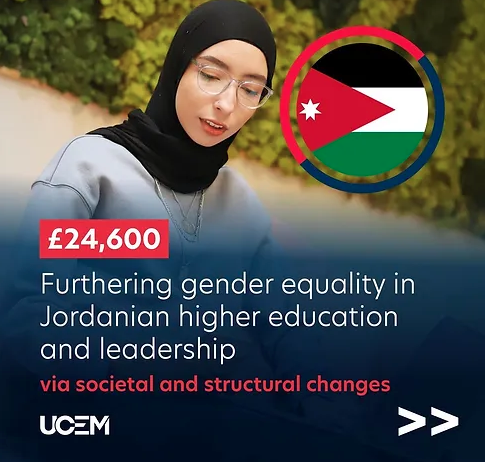
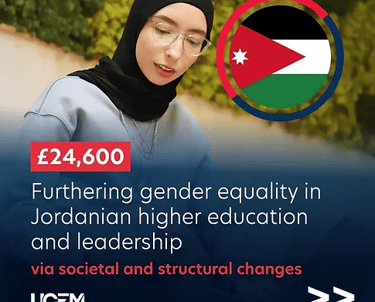
£24,600 for ‘Furthering gender equality in Jordanian higher education and leadership via societal and structural changes.’ In partnership with Philadelphia University, Jordan.
The inequality and inclusion of women in leadership of academics is a common problem worldwide. In the UK, the gender imbalance is severe at the executive management level (Davies, 2015), similarly women are underrepresented in university leadership roles (Morley, 2013). Across the sector, 27.5% of academic managers and 20.5% of professors are female, and only 17% hold the top vice-chancellor and principal roles. If the UK stats are bleak, the stats for Jordan are a wider cause for concern, something this research will aim to address.
The project has been successfully delivered with all its work packages, and is concluded on March 2024. Please read our publications about this project at:
Alshdiefat, Ala’a Saleh, Ahlam Ammar Sharif, Noor-Alhuda Mohammad Abu Ghunmi, Angela Lee, and Muhammad Qasim Rana. (2024). "Factors Impacting Women Gaining Leadership Roles in the Jordanian Construction Sector: Architects and Civil Engineers" Buildings 14, no. 4: 944. https://doi.org/10.3390/buildings14040944
Find more Information about the project at: www.leadjordan.com
Jordan 2
£23,950 for ‘Levelling up STEM! Towards gender equality in the pathways to Jordanian Higher Education and employability.’ In partnership with the Hashemite University, Jordan.
With a literacy rate of over 98% (World Bank, 2018), Jordan can proudly boast that it is one of the most highly educated countries in the region. UNESCO reported in April 2022 that the proportion of female students in the natural sciences, medicine, dentistry, and pharmacy was more than 60%; however the figure in other areas of STEM is disparate, with engineering being a low 28%. Whilst females are not restricted in curricular choice, somewhat tangible and intangible societal and cultural constraints impede work opportunities in certain disciplines. This piece aims to look at how gender equality in STEM areas can be improved.
The project has been successfully delivered with all its work packages, and is concluded on March 2024. Please read our publications about this project at:
1. Sharif, Ahlam Ammar, Alaa Saleh Alshdiefat, Angela Lee, Muhammad Qasim Rana, and Noor-Alhuda Mohammad Abu Ghunmi. (2024). "Gender Equality in Architecture and Construction: An Assessment Framework at the Institutional and Sectoral Levels in Jordan" Buildings 14, no. 3: 764. https://doi.org/10.3390/buildings14030764
2. Sharif, Ahlam A., Angela Lee, Alaa S. Alshdiefat, Muhammad Q. Rana, and Noor-Alhuda Abu Ghunmi. (2024). "Sustainable Gender Equality: A Comparative Perspective on STEM Education and Employment in Jordan" Sustainability 16, no. 6: 2273. https://doi.org/10.3390/su16062273
Find more Information about the project at: www.upjordan.com
Egypt
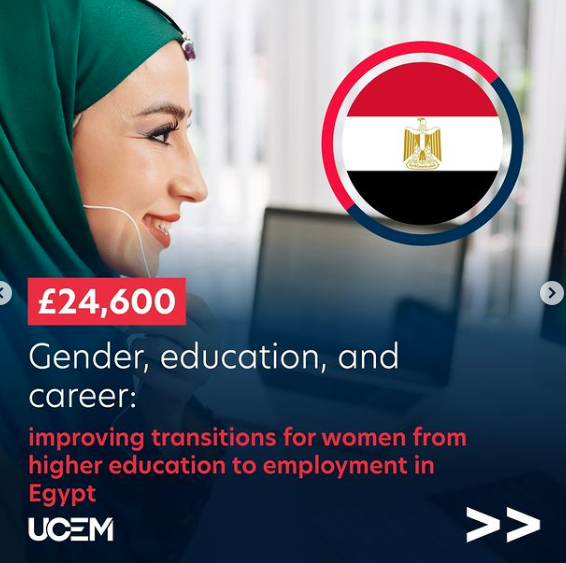
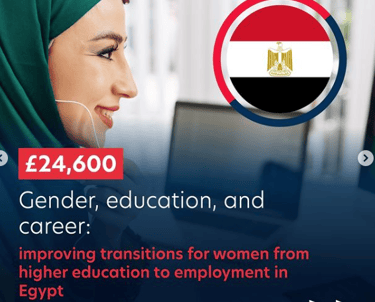
£24,600 for ‘Gender, education, and career; improving transitions for women from higher education to employment in Egypt.’
According to the Global Gender Gap Report (2015) and the World Bank (2016), thirteen out of the fifteen countries with the lowest rates of female workforce globally are in the Middle East and North Africa (MENA). It is estimated that this accounts for 27% of income loss due to the gap in female workforce participation. A study in Egypt remarks that while the country seems to have successfully prepared female engineers, the difficulty confronting these engineers starts after graduation when they are looking to enter the workforce (Adams & Miller, 2016). Therefore, investigating the factors that lead to this drop is crucial for understanding and tackling the problem to minimize the gender equality gap in Egypt.
The project has been successfully delivered with all its work packages, and is concluded on March 2024. Please read our publications about this project at:
Rana, Muhammad Qasim, Shadia Fahim, Mohammed Saad, Angela Lee, Olugbenga Timo Oladinrin, and Lekan Damilola Ojo. (2024). "Exploring the Underlying Barriers for the Successful Transition for Women from Higher Education to Employment in Egypt: A Focus Group Study" Social Sciences 13, no. 4: 195. https://doi.org/10.3390/socsci13040195
Find more Information about the project at: www.inclusivegypt.com
Equal-Brazil
For more, please contact us at:
m.rana@ube.ac.uk