
Empowering Women in Brazilian Higher Education through Violence Prevention and Safe Learning Environments; SafeEduBrazil
A British Council, Going Global Partnerships funded Project
About SafeEduBrazil
The SafeEduBrazil project aimed to tackle and reduce violence against women in Brazilian higher education institutions. Wider research consistently demonstrated that many women experienced some form of gender-based violence during their time at university. However, such incidents were frequently underreported due to fear of retaliation, social stigma, lack of trust in institutional mechanisms, and inadequate or inaccessible support systems. While several Brazilian universities had begun implementing measures to address these challenges, such as developing policies against gender-based violence, establishing dedicated support services for victims, and offering training programmes to raise awareness of sexual harassment and violence prevention, the effectiveness of these measures varied significantly across institutions. As a result, substantial gaps remained in creating consistently safe, supportive, and inclusive learning environments.
SafeEduBrazil responded to this need by strengthening institutional capacity, raising awareness, and promoting evidence-based approaches to violence prevention and gender equality. The project contributed to advancing safer academic environments for women in Brazilian higher education while fostering long-term institutional and cultural change.




Project Deliverables
The SafeEduBrazil project proposed and delivered practical solutions to advance gender equality and improve safety for women in Brazilian higher education institutions. These objectives were achieved through the following key deliverables:
Raised awareness and understanding of gender-based violence and gender equality issues among Brazilian university students and staff through training, workshops, and engagement activities.
Developed and supported the implementation of comprehensive gender equality policies and institutional support systems designed to prevent and address violence against women in higher education.
Empowered students and staff by equipping them with the knowledge, skills, and confidence needed to create safe, inclusive, and supportive learning environments. By doing so, the project addressed immediate challenges related to gender-based violence while contributing to longer-term cultural and institutional change.
Strengthened international partnerships between UK and Brazilian institutions, fostering sustained collaboration, knowledge exchange, and mutual learning in gender equality and violence prevention.
Contributed to long-term and sustainable institutional change by promoting gender equality, addressing gender-related biases, and enhancing the safety and wellbeing of women across higher education settings.
Disseminated project outputs through the project website, partner university platforms, international conferences, and peer-reviewed journal publications to maximise the reach and impact of the work.


Our 7 Funded Projects on Gender at UBE
Gender inequality remains one of the most persistent global challenges within the built environment, higher education, and wider society. The University of the Built Environment is proud to have led and delivered seven major externally funded research and capacity-building projects focused specifically on gender equality, supported through competitive grants from the British Council.
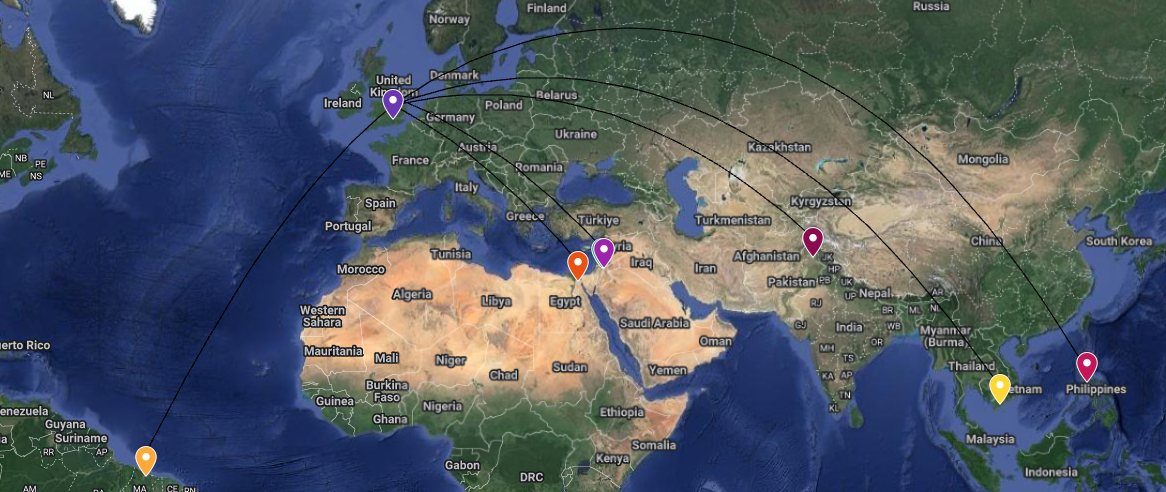
Together, these seven projects represent a combined investment of £172,940 dedicated exclusively to advancing gender equality, preventing violence, improving transitions from education to employment, and strengthening institutional capacity across Brazil, Pakistan, Egypt, Jordan, and Vietnam, in partnership with universities, policymakers, and civil-society organisations. Through international collaboration, evidence-based research, and targeted capacity building, these projects have formed a global gender-equality research network, positioning the University of the Built Environment as a leading hub for gender-focused scholarship and impact.
Our Project Team
Find out about our project Team at:
The team consists of UK and Brazilian PIs:
UK PI: Dr Muhamad Qasim Rana
UK Co-PI: Prof Angela Lee
Brazilian PI: Dr Fernando Bazerra
Researcher: Dr Lekan Ojo Demilola
Our Recent Publications (Free Access)
Explore our latest publications, results, and research outputs in the area of Gender Equality
Rana, Muhammad Qasim, Lee, Angela, Bezerra, José Fernando Rodrigues, Ojo, Lekan Damilola and Villas Boas, Guilherme Hissa (2025), Causal Factors of Violence Against Women and Girls (VAWG): Perspectives from Brazilian Higher Education Students, Societies, 15(9), 261, available at: https://doi.org/10.3390/soc15090261.
Rana, Muhammad Qasim, Lee, Angela, Bezerra, José Fernando Rodrigues, Ojo, Lekan Damilola and Villas Boas, Guilherme Hissa (2025), Evaluating the Agreement Index of the Barriers Faced by Women during the Transition from Higher Education to Empowerment in Brazil: A Sustainable Development Perspective, Administrative Sciences, 15(3), 82, available at: https://doi.org/10.3390/admsci15030082.
Rana, Muhammad Qasim, Lee, Angela, Tran, Van Ty, Lam, Dao Phong and Oladinrin, Olugbenga Timo (2025), Fostering Sustainability through Gender Equality: Perspectives of Lecturers and Students in Vietnamese Higher Education, Journal of Architectural Engineering Technology, 14(3), 452, available at: https://www.omicsonline.org/open-access/fostering-sustainability-through-gender-equality-perspectives-of-lecturers-and-students-in-vietnamese-higher-education-136584.html.
Rana, Muhammad Qasim, Lee, Angela, Tran, Van Ty and Lam, Dao Phong (2025), Gender Equality and Sustainability in Vietnamese Higher Education: Educators’ Perspectives, Administrative Sciences, 15(5), 164, available at: https://doi.org/10.3390/admsci15050164.
Alshdiefat, Ala’a Saleh, Lee, Angela, Sharif, Ahlam Ammar, Rana, Muhammad Qasim and Abu Ghunmi, Noor-Alhuda Mohammad (2024), Women in Leadership of Higher Education: Critical Barriers in Jordanian Universities, Cogent Education, 11(1), available at: https://doi.org/10.1080/2331186X.2024.2357900.
Rana, Muhammad Qasim, Saher, Noreen, Lee, Angela and Shabbir, Zeba (2024), Barriers to Empowerment: Examining the Transition of Pakistani Women from Higher Education to Professional Life, Social Sciences, 13(10), 514, available at: https://doi.org/10.3390/socsci13100514.
Rana, Muhammad Qasim, Lee, Angela, Bezerra, José Fernando Rodrigues and Villas Boas, Guilherme Hissa (2024), Empowerment and Sustainability: Investigating Barriers to Women’s Transition from Higher Education to Empowerment in Brazil, Societies, 14(11), 234, available at: https://doi.org/10.3390/soc14110234.
Sharif, Ahlam Ammar, Lee, Angela, Alshdiefat, Ala’a Saleh, Rana, Muhammad Qasim and Abu Ghunmi, Noor-Alhuda Mohammad (2024), Sustainable Gender Equality: A Comparative Perspective on STEM Education and Employment in Jordan, Sustainability, 16(6), 2273, available at: https://doi.org/10.3390/su16062273.
Sharif, Ahlam Ammar, Alshdiefat, Ala’a Saleh, Lee, Angela, Rana, Muhammad Qasim and Abu Ghunmi, Noor-Alhuda Mohammad (2024), Gender Equality in Architecture and Construction: An Assessment Framework at the Institutional and Sectoral Levels in Jordan, Buildings, 14(3), 764, available at: https://doi.org/10.3390/buildings14030764.
Alshdiefat, Ala’a Saleh, Sharif, Ahlam Ammar, Abu Ghunmi, Noor-Alhuda Mohammad, Lee, Angela and Rana, Muhammad Qasim (2024), Factors Impacting Women Gaining Leadership Roles in the Jordanian Construction Sector: Architects and Civil Engineers, Buildings, 14(4), 944, available at: https://doi.org/10.3390/buildings14040944.
Rana, Muhammad Qasim, Fahim, Shadia, Saad, Mohammed and Lee, Angela (2024), Exploring the Underlying Barriers for the Successful Transition for Women from Higher Education to Employment in Egypt: A Focus Group Study, Social Sciences, 13(4), 195, available at: https://doi.org/10.3390/socsci13040195.
Rana, Muhammad Qasim, Fahid, S., Saad, M. and Lee, Angela (2024), Gender and Career: Exploring Transitions for Women from Higher Education to Employment in Egypt, International Journal of Science, Engineering and Management (IJSEM), 11(3), pp. 9–13, available at: https://www.ijsem.org/gender-and-career-exploring-transitions-for-women-from-higher-education-to-employment-in-egypt

Contact Us
Equal-Brazil
For more, please contact us at:
m.rana@ube.ac.uk